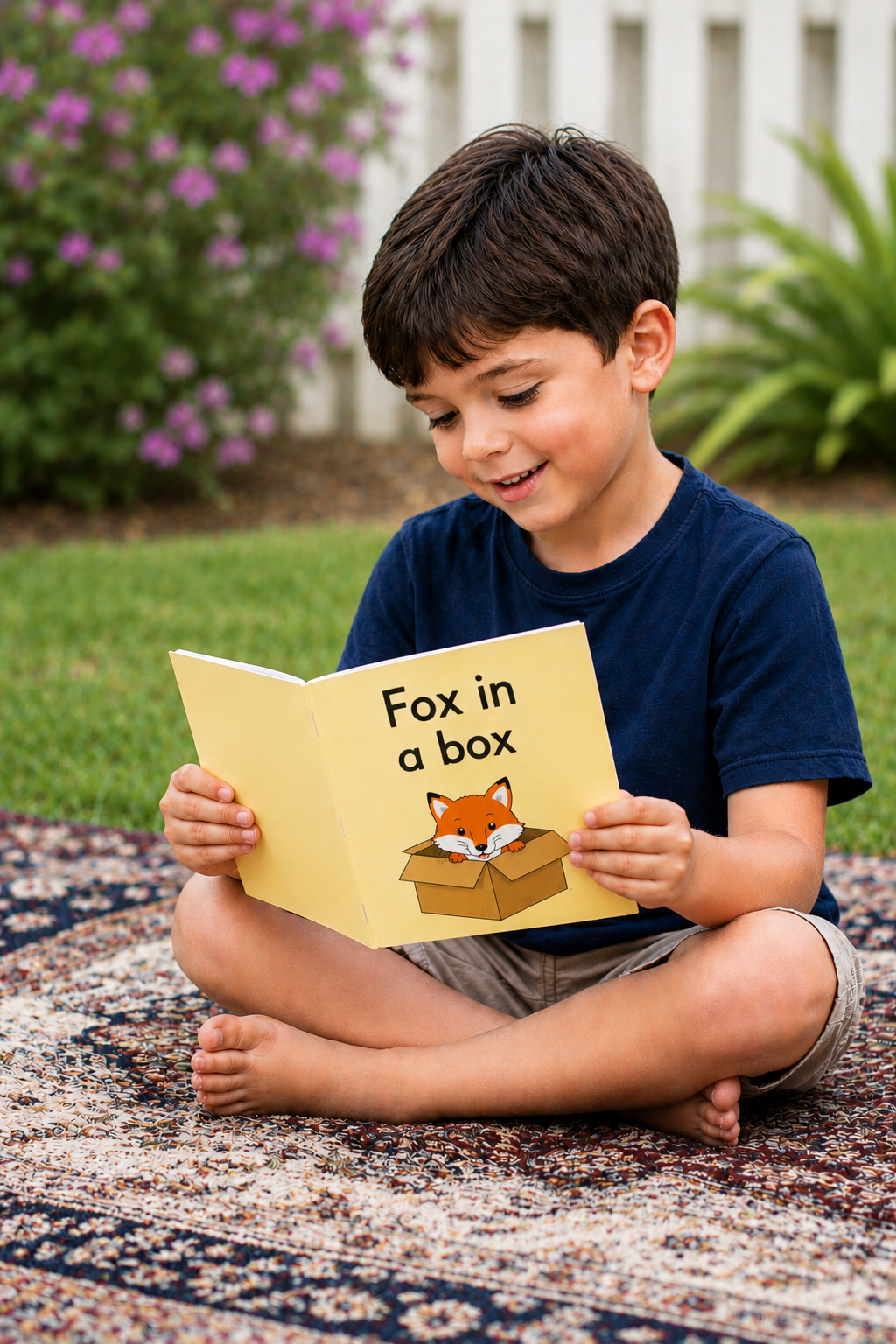
With the right method, your child could be reading simple words before they walk through the door.
Get the free Blending Guide →Whether your child is preparing for a 4+ assessment or you simply want them ahead of the curve, the skills that assessors and teachers look for are the same.
Alongside social confidence and focus, most schools will check whether your child can recognise letters and the sounds they make. They will also ask children to blend simple sounds together. These aren't skills children pick up by chance. They need to be built - carefully, and early.
What schools are looking for:
The good news: all of this is teachable. And it's most effectively built at home, by you, in short daily moments - not in weekly tutoring sessions.

Of all the early literacy skills, blending is the one that separates children who can decode words from those who can't.
Blending is what happens when a child hears the sounds f-o-x and understands that means fox. It sounds simple. But for many children, it's the step that doesn't click - even when they know their letter sounds.
Children who can blend have a significant advantage in any early assessment. They're not just recognising isolated letters - they're demonstrating that they understand how sounds work together. That's exactly what assessors and Reception teachers are trained to look for.
Most phonics teaching starts with letters on a page. I do things differently.
My method starts with sound first - reducing pressure and helping children tune into the sounds in words before relying on print. Children practise blending through games and playful activities using their ears first, while simple letter recognition is introduced gradually and naturally alongside the oral work.
The two reinforce each other, and for a bright, motivated child the progress can be remarkable.
I've seen children reading simple CVC words well before they start school. With the right method and regular practice at home, it's entirely achievable - and it puts your child in a genuinely strong position from day one.
This approach works because it is:
Young children can't concentrate for an hour. And once a week isn't enough for a skill like blending to stick. I realised early on that tutoring just isn't the right model for this age group.
When you want your child reading before Reception, you also can't afford to wait for weekly sessions to slowly add up.
Instead, I coach parents to build short, regular practice into everyday life. That's what actually moves children forward.
I'm Joanna - a phonics specialist and QTS-qualified teacher with 12 years in Reception and Key Stage 1. I've supported hundreds of children to become confident early readers, including children with additional learning needs. I created My Phonics Coach to give parents the knowledge and tools that make a real difference.
Not sure where your child is starting from? My free Blending Check gives you a clear picture in minutes.
Take the Blending Check →A practical guide to getting started with oral blending at home - written for parents, not teachers.
Download the free guide →Short, actionable tips delivered to your inbox. Simple tips to support your child's blending at home, week by week.
Sign up →A complete parent coaching programme that takes your child from first sounds to confident blending - and for bright, motivated children, to reading simple words before Reception. Self-paced, practical, and designed around short sessions that fit into real family life.
Find out more →Many children who follow this method are reading simple words well before Reception - with just a few minutes of practice a day. The best time to start building your child's blending foundation is now.
Get the free Blending Guide →